

Laminate and floating engineered floors share a problem: they’re a hard skin over a cavity. Underlay’s job is to kill the drum, protect the locks, and manage vapor without turning the walk into a trampoline.
Three jobs, one roll (if you pick right)
- Acoustics — reduce impact noise in the room and to the ceiling below
- Mechanical — support click joints; resist permanent crush
- Moisture — block vapor from below when the assembly requires it
Any product that only does “soft” without density is a short-term comfort buy and a long-term complaint.

Sound: aim for quiet, not squishy
Condo boards quote IIC and STC like scripture. Those lab numbers are useful for comparison, but your real test is: does the hallway stop sounding like a xylophone at 6 a.m.? Denser fiber and quality foam with vapor film tend to win over dollar-bin rolls that compress to paper in a year.
If you live over a garage or basements-as-living-space, spend on underlay before you spend on a fancier plank finish. The ear notices structure more than a slightly better photo of oak grain.
Moisture film: on when the brand says on
On concrete, a floating wood-look floor without a vapor strategy is gambling. Integrated film underlays (lip-and-tape seams) are popular because they reduce a second roll of poly. Separate 6 mil film still has a place when the underlay is vapor-open or the brand mandates it.
On a dry, well-vented wood subfloor upstairs, some brands allow underlay without a full vapor barrier — or even require the stack to breathe. Again: sheet, not vibes.
Fiber vs foam without the brand war
Fiber (recycled felt-style) — often excellent sound, good compression resistance, friendly under laminate and many engineered floats. Watch thickness with pre-attached pad.
Closed-cell foam 2-in-1 / 3-in-1 — light, cheap per foot, easy DIY. Quality varies wildly. Pinch it. If it stays crushed, keep shopping.
Wood fiber boards — firm, knife-cut, great “solid” walk; moisture story is different (often open). Brilliant in the right stack, wrong when you needed a sealed film and didn’t add one.
Layout and underlay interact
Long runs of laminate expand. Underlay that bunches at a doorway becomes a high spot the planks telegraph forever. Dry-fit the underlay path the way you dry-fit planks. Cut cleanly around vents. Do not layer scraps into a patchwork quilt unless the manufacturer allows piecing and you tape seams correctly.
Radiant heat systems have their own underlay allow-lists. “It fit in the cart” is not an approval.
Starting lineup


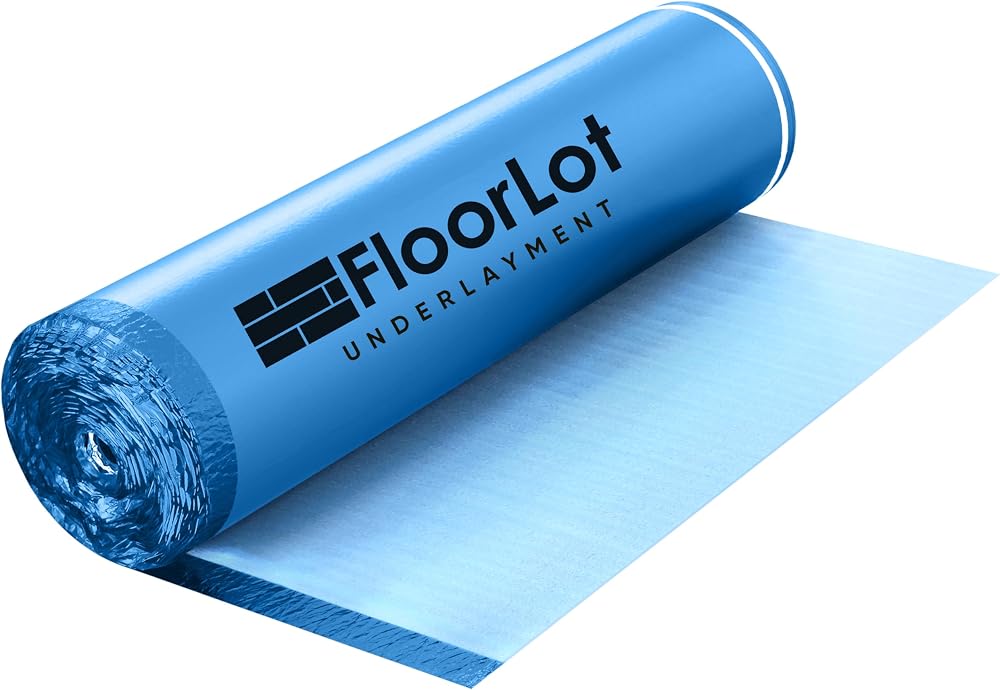
Straight answers
My laminate has pad attached. Add more?
Only if the flooring brand allows it. Many fiber underlays advertise pre-attached-pad approval — that language matters. Unauthorized double padding is a classic warranty void.
Will underlay fix an uneven floor?
Minor telegraphing, maybe. Real dips and humps need leveling. Underlay is not self-leveling compound in a roll.
Cork — worth it?
For a natural feel and decent acoustics under floating wood, yes when thickness and moisture rules fit. It’s not magic, and it’s not carpet pad.
Keep reading
Shop underlays & pads All guides
Manufacturer install sheets win every argument. Underyoo is discovery and judgment; checkout stays on Amazon. We do not merchandise adhesives.