

If you only steal one rule from this page: match the flooring brand’s underlay rules before you match a blog post. The install sheet is the boss. Everything below is how to read that sheet like someone who has pulled a floor back up because the “great deal” pad was wrong.
Why LVP acts different underfoot
Click-lock LVP and SPC/WPC rigid cores want a stable, relatively firm base. The locks are engineered for a specific deflection range. Put a marshmallow under them and the joints work harder every time someone walks through. That shows up as:
- Hollow “drum” sound on foot traffic
- Micro-gapping at seams after seasons of expansion
- Telegraphing of high spots you never noticed under carpet
- Warranty language that quietly excludes “non-approved underlayment”
Old-school thick foam under cheap laminate was about hiding a bad subfloor. Rigid vinyl is closer to a floating tile: the surface is stiff, so the underlayer has to support that stiffness, not fight it.

What the stack usually looks like
*Some underlays include a film already. Stacking two vapor films “for luck” can trap moisture in dumb places. One designed moisture story is enough.
Subfloor flatness is not optional theater. Most LVP brands want something like 3/16" in 10' (check yours). Underlay is not a mudjack. If the floor looks like a skate ramp, fix the substrate first.
Firmness beats “cushion feel”
Shoppers walk the showroom, bounce on a foam sample, and buy the softest thing in the aisle. Six months later the hallway sounds like a basketball court. For rigid vinyl you usually want:
- High density / low compression set — recovers after a fridge rolls across it
- Documented IIC/STC numbers if you care about the room below (condos)
- Explicit LVP / LVT / rigid-core approval on the listing or tech sheet
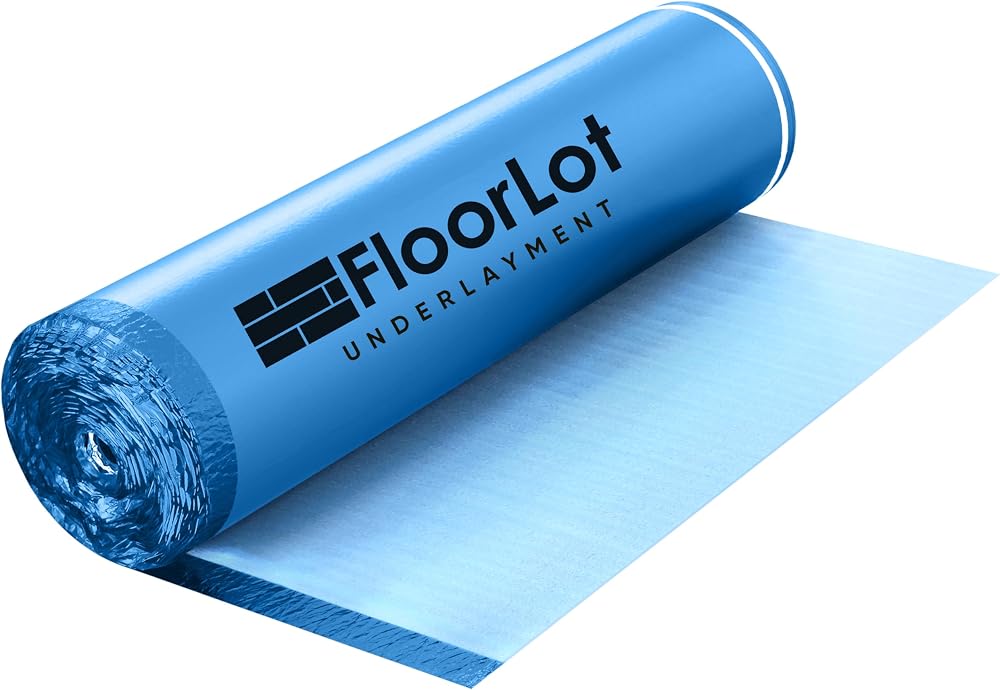
Fiber underlays (QuietWalk LV class, some wood-fiber boards) feel “quiet solid” rather than soft. Closed-cell foam 3-in-1 rolls can work when they’re thin and firm enough — but the bargain bin blue foam that crushes under a thumb is a red flag.
Concrete slab: vapor is a real problem
On grade concrete, moisture vapor doesn’t need a flood to wreck a floating floor. It moves as vapor pressure. Brands respond with RH / MVER limits and often require a vapor barrier under the underlay (or an underlay with an integrated film that meets their rating).
Do not freestyle moisture control
If the brand says “6 mil poly, seams taped,” do that. If they say “use our approved underlay only,” don’t invent a stack from three Amazon boxes. Underyoo lists pads and films for discovery — the install sheet still wins.
Wood-fiber underlays are often vapor-open. That is a feature for some assemblies and a hard no for others. Read the product. Breathable is not the same as waterproof.

Thickness ceilings are real
Many LVP warranties cap total underlay thickness (sometimes including any pre-attached foam on the plank). Going thicker “for comfort” can void coverage and make transitions to tile or carpet look wrong. Measure:
- Any foam already on the plank bottom
- Underlay you plan to add
- Door clearances and reducer heights
If the brand says max 1–1.5 mm underlay on top of attached pad, believe them. Silence the room with a better product class, not more inches of mush.
Pre-attached pad is not a free pass
Planks with foam already stuck on the back are common. Some brands still allow a thin additional underlay for sound; others forbid anything extra. “Approved for pre-attached pad” language on QuietWalk-style products exists for a reason — it means someone tested the stack. Guessing is how you get a squeaky hallway and a shrug from warranty.
Subfloor prep people skip (and regret)
Underlayment cannot fix a floor that’s out of flat. Before you roll anything out:
- Sweep and vacuum like you mean it — grit under underlay becomes a permanent freckle under thin vinyl
- Check flatness with a straightedge; high spots grind, low spots flex locks
- On wood, fix squeaks and loose panels first; floating floors amplify movement
- On concrete, know your moisture test plan if the brand demands numbers, not vibes
Installers bill for this work because it is the difference between a quiet floor and a callback. DIY does not get a free pass from physics.
Condos, apartments, and the neighbor below
If you have a board or a lease that mentions acoustic ratings, collect IIC/STC from the underlay tech sheet and keep the PDF. Marketing blurbs on Amazon are not documentation. Pair a serious underlay with soft furnishings (rugs, curtains) if the room is a hard box — underlay is necessary but not always sufficient for a party unit over a light sleeper.
That said, chasing mythical silence with three inches of soft foam under rigid core is how locks suffer. Density and the right product class beat bulk.
Transitions, doors, and height creep
Every millimeter of underlay raises the finished floor. Measure:
- Door undercuts (a multi-tool is cheaper than a cursed door that scrapes)
- Reducer and T-molding reveal heights
- Dishwasher and range clearances if the kitchen is in play
Whole-house height changes also change how thresholds meet tile or existing hardwood. Plan the stack once, buy moldings that match, and do not discover the math at 10 p.m. with half a hallway installed.
Install-day habits that separate clean jobs from messes
- Acclimate planks per the brand — ignore this and own the gaps
- Roll underlay dry, cut with a sharp knife, seal film seams as specified
- Do not walk dirt across open underlay all day; it becomes the permanent sand layer
- Stagger plank ends per instructions; underlay will not hide a bad layout
- Leave perimeter expansion gaps — floating floors move whether you believe them or not
Sensible starting points from the Roo stack
These are discovery picks, not a single “best” for every brand. Open the product note, then confirm against your plank’s sheet.



What we will not push
Liquid flooring adhesives, “glue-down only” systems dressed up as underlay, or carpet rebond sold as LVP pad. Different job, different product family.
Straight answers
Can I use carpet pad under LVP?
No. Carpet cushion is soft, thick, and built for stretch-in carpet. Under rigid vinyl it over-flexes the locks and usually voids the flooring warranty.
Do I need underlay if the plank has foam on the back?
Only if the flooring manufacturer allows it. Many stacks are “attached pad only.” Others permit a thin, approved additional layer for sound. Read the sheet for your exact SKU.
Is wood fiber okay under LVP?
Often yes when thickness and moisture rules line up — STEICO-class boards are popular for firm, quiet installs. Confirm vapor-open behavior on slab and any max thickness.
What’s the #1 mistake you see?
Buying the softest foam on Amazon because the reviews say “comfy,” then fighting hollow sound and joint stress. Firm + brand-approved beats plush every time on rigid core.
Keep reading
Shop underlays & pads All guides
Manufacturer install sheets win every argument. Underyoo is discovery and judgment; checkout stays on Amazon. We do not merchandise adhesives.